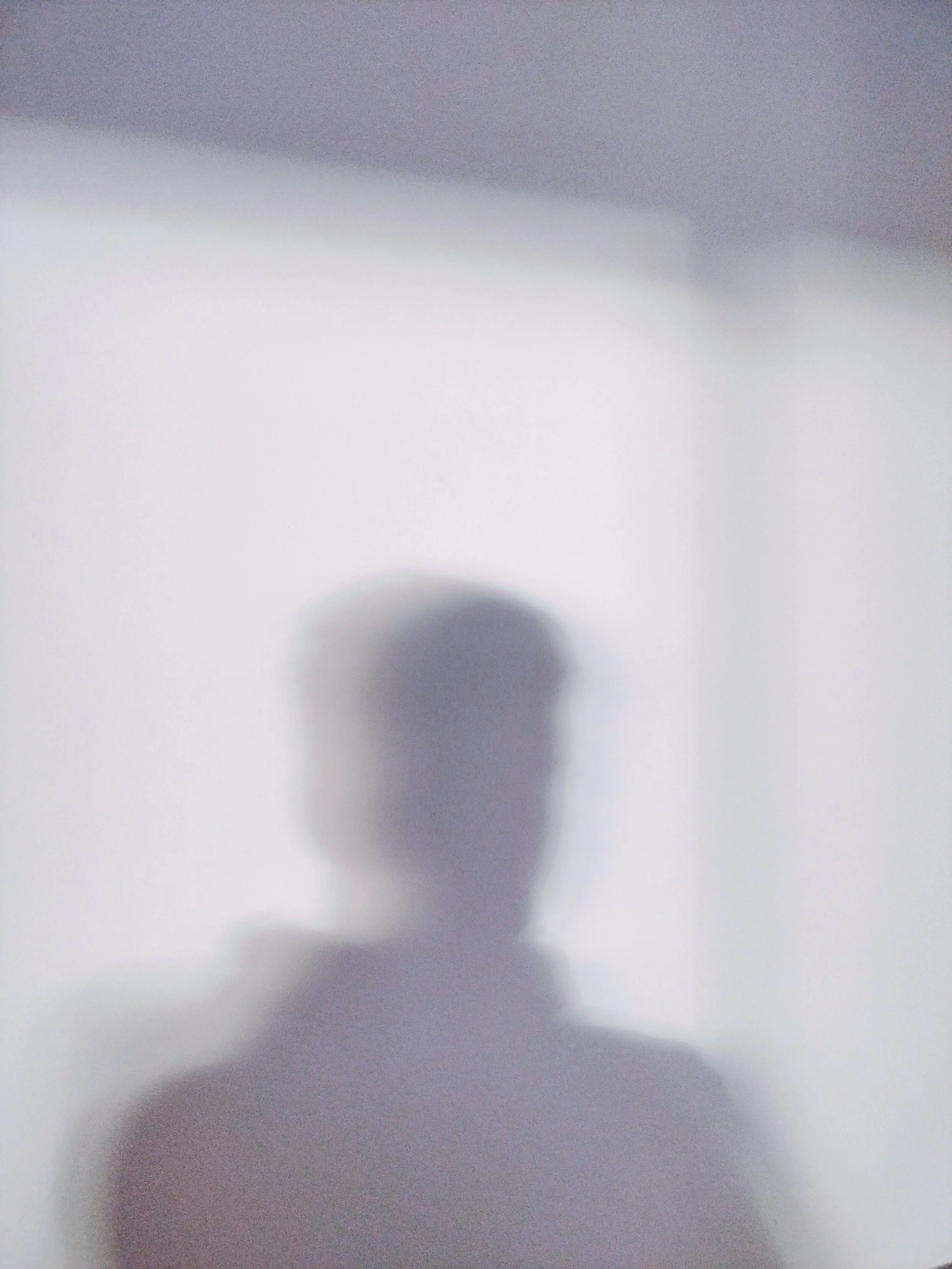
In the theater of life, the self is much like a shadow on a wall, cast by the light of consciousness. Just as the shadow in the image relies on light for its existence, the self is illuminated into being by the awareness we bring to our thoughts and actions. It's an outline, a silhouette defined not just by the substance of our being but also by the context in which we find ourselves.
The ego, in this metaphor, is an out-of-focus shadow—recognizable but indistinct, a placeholder for the complexity it represents. It can seem large or small, fearsome or feeble, all depending on the angle of the light and the surface upon which it is cast. Yet, the shadow itself is insubstantial, without form or texture. It is a dark echo of the self, a reminder that our perception of who we are is often blurred and distorted, shaped by the interplay of internal desires and external influences.
This elusive shadow we chase, this ego, is as much a construct as it is a perception. It shifts and changes, grows and shrinks, appearing solid yet remaining intangible. It's a reflection of our deepest insecurities and our grandest illusions, a manifestation of the psyche's dance between the light of truth and the darkness of ignorance.
As we move through the world, our self—this shadow—moves with us, sometimes leading, sometimes following. It can trap us in its dark grasp if we believe it to be the entirety of our existence, or it can liberate us if we recognize it as a mere aspect of a more profound essence. For beyond the flickering shadow lies the source of light itself: a boundless self-awareness that casts the shadow but is not confined by it, a true self that exists within and without the dance of light and dark.